
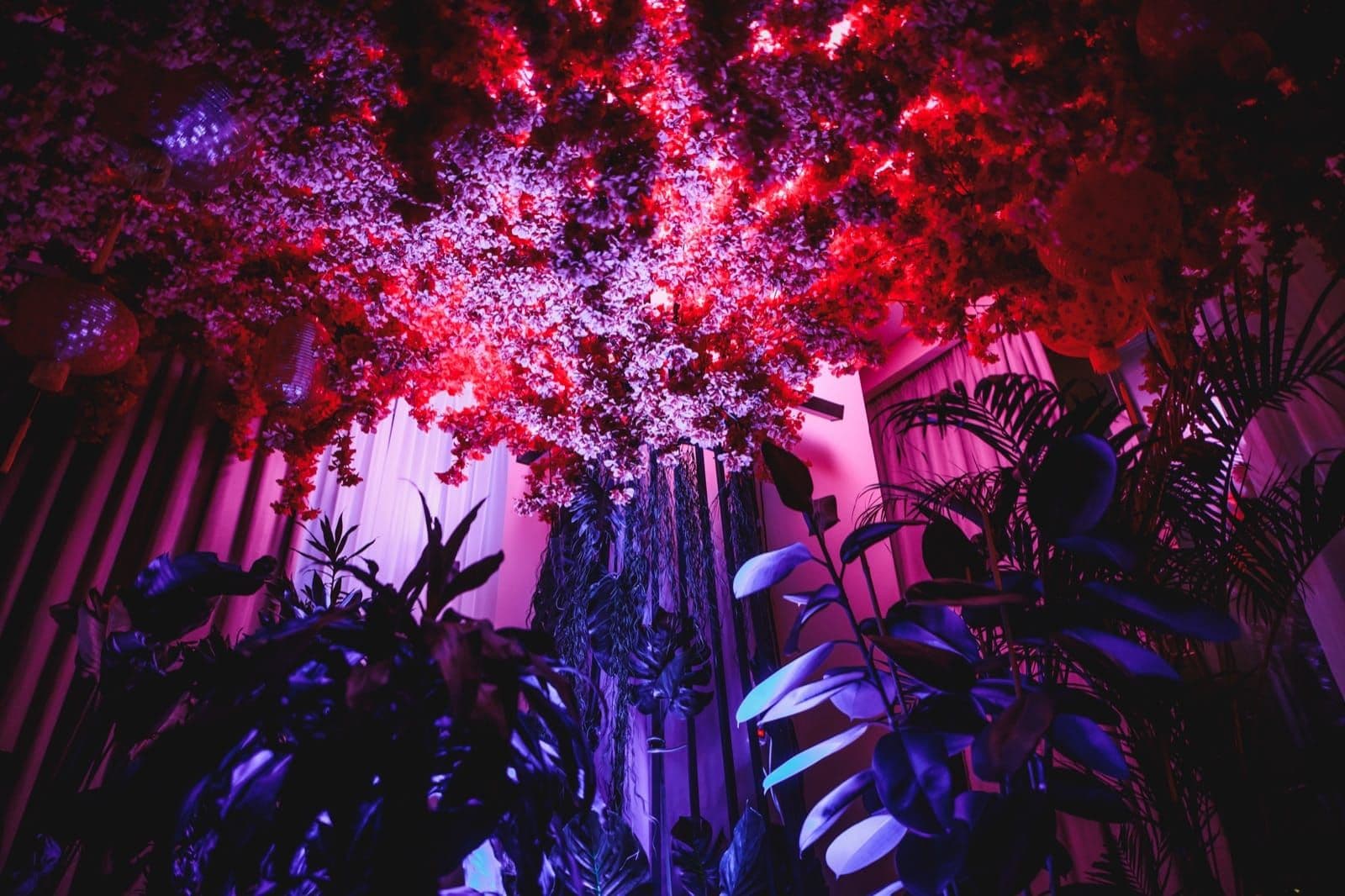
We saw these rooms in science fiction.
And wanted to step inside.
Phygital interiors combine physical spaces with digital art, light and spatial sound. At Clear Visionary, we compose these elements into atmospheres that change with the occasion, the time of day or a resident’s choice.
Explore the essay +
Before it became a real project,
it was a scene in a movie.
A character enters a room. The light changes. A wall becomes somewhere else. For a moment, you imagine living there.
Science fiction gave this desire a visual language. These four worlds from film and television have stayed with us.
Light becomes architecture.
Golden reflections move across a monumental room. Light seems almost liquid: it changes the feeling of the architecture without changing a single wall.
A view you can choose.
An ordinary kitchen opens onto a lake and mountains. The appeal is immediate: another world, right where you live.
Walls become living images.
In Neo Seoul, a surface can unfold into colour, flowers and movement. The room gains a changing skin — an atmosphere you can enter.
A hotel with a personality.
Poe, the hotel’s AI host, gives The Raven a voice and a personality. The building feels like someone you can talk to.
What draws us to these spaces is the possibility of a room that transforms, responds and feels personal. We follow that idea from the screen into our work.
The wall becomes a canvas. Sound gives the room depth. A gesture changes the atmosphere. The appeal is the freedom to shape how home feels.
What if home
could feel like that?
The beauty draws us in first. Then the surprise: a familiar room can become somewhere else. You want to reach out and see what happens.
Soon, you begin to imagine everyday life inside it.
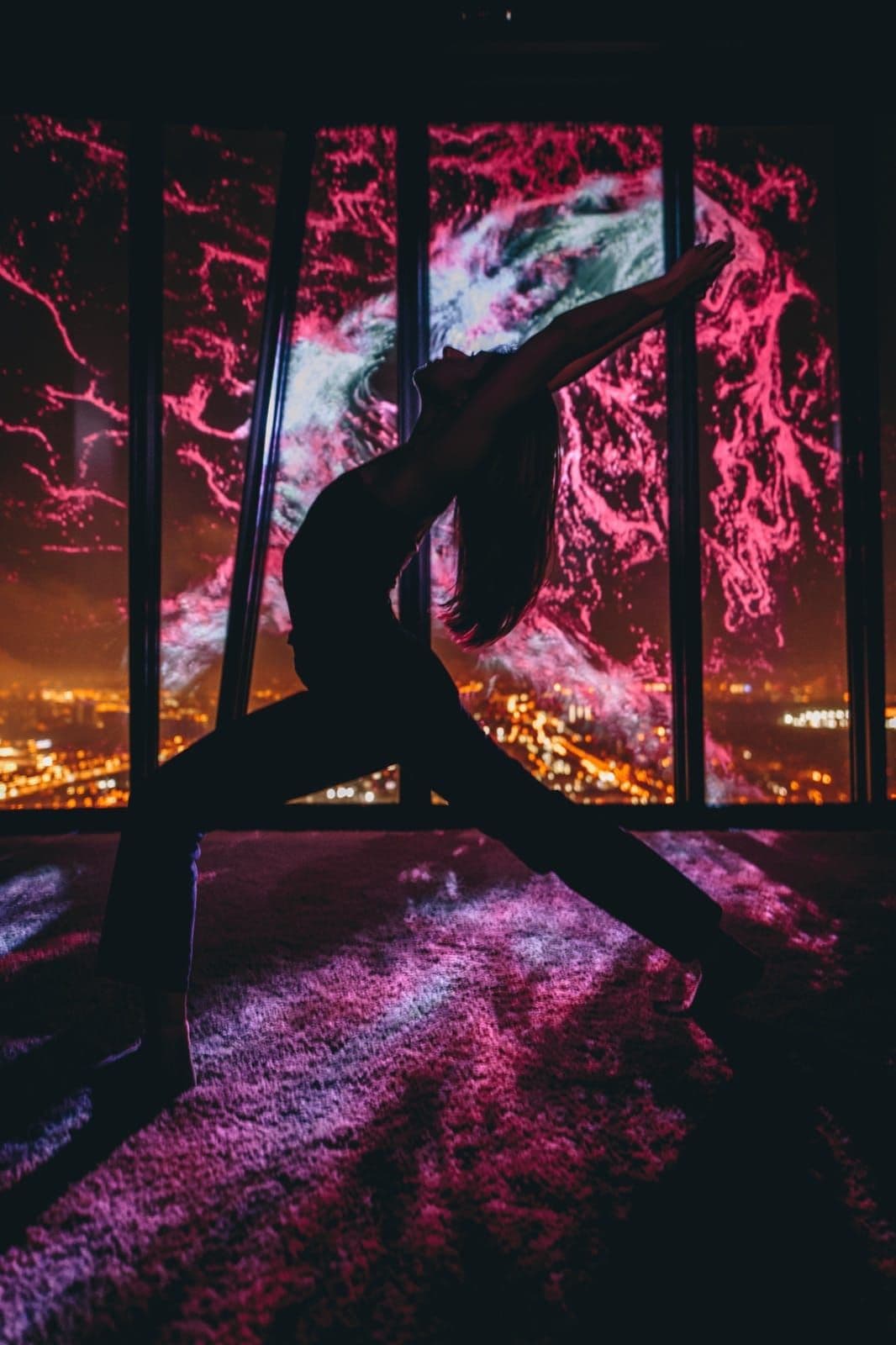
The freedom to change your surroundings.
We choose music to suit an evening. We travel for a change of atmosphere. A responsive interior brings that freedom into the place we live.
Room for every version of you.
Company on Friday. Solitude on Sunday. The same home can hold both, with a different light, sound and pace.
The feeling of being part of it.
When an artwork follows a gesture, your presence makes a difference. You become part of what you are seeing.
More life in an ordinary moment.
Dinner feels like an occasion. The light changes, the music deepens, and friends stay a little longer. An ordinary evening becomes one you remember.
We wanted to step into those rooms.
Then stay for the evening.
From a screen world
to a real home.
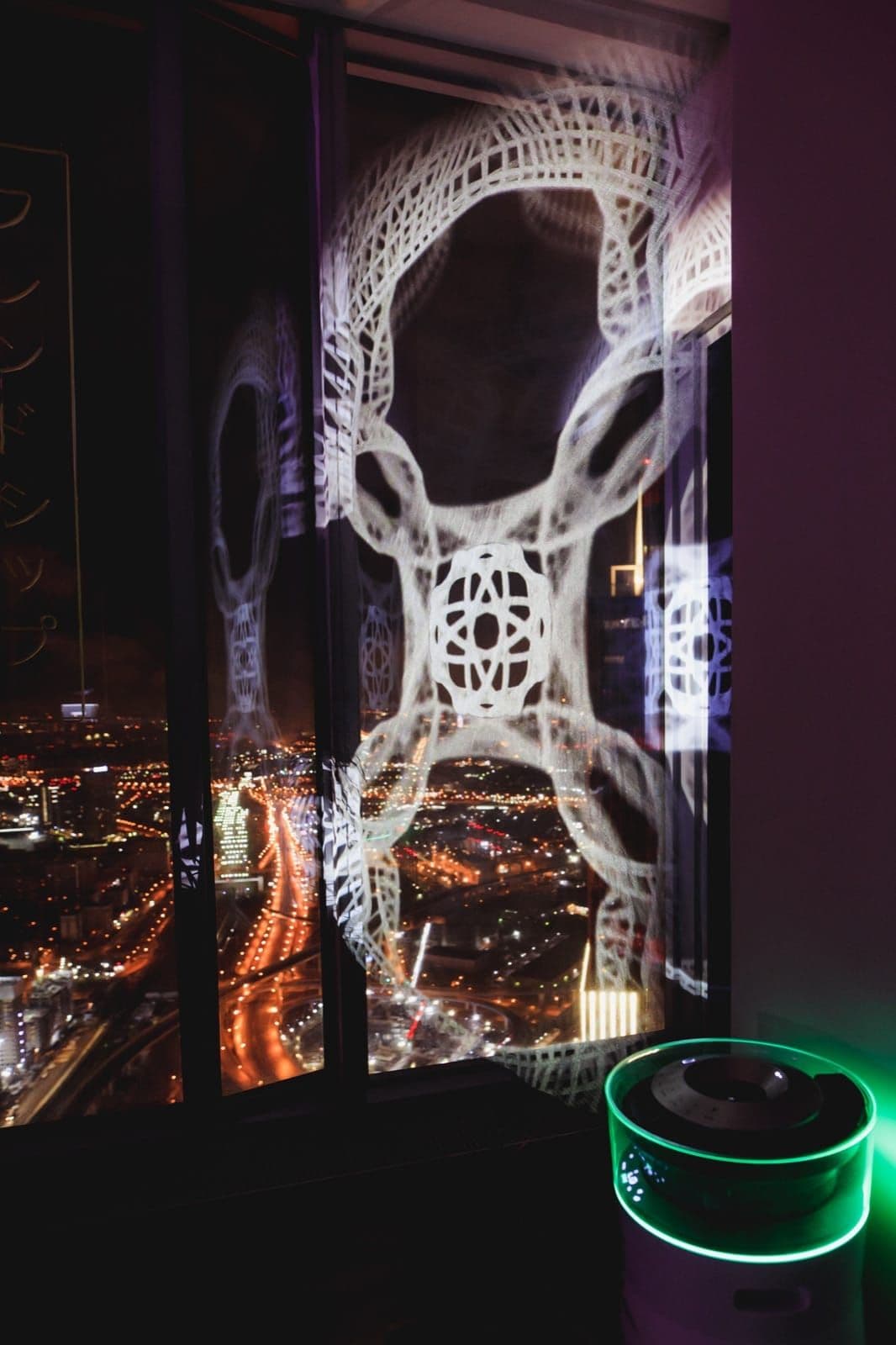
At Cyber Zen Apartment in Moscow’s OKO Tower, we explored what that could mean in a real home.
A calm home by day.
A digital sanctuary
after dark.
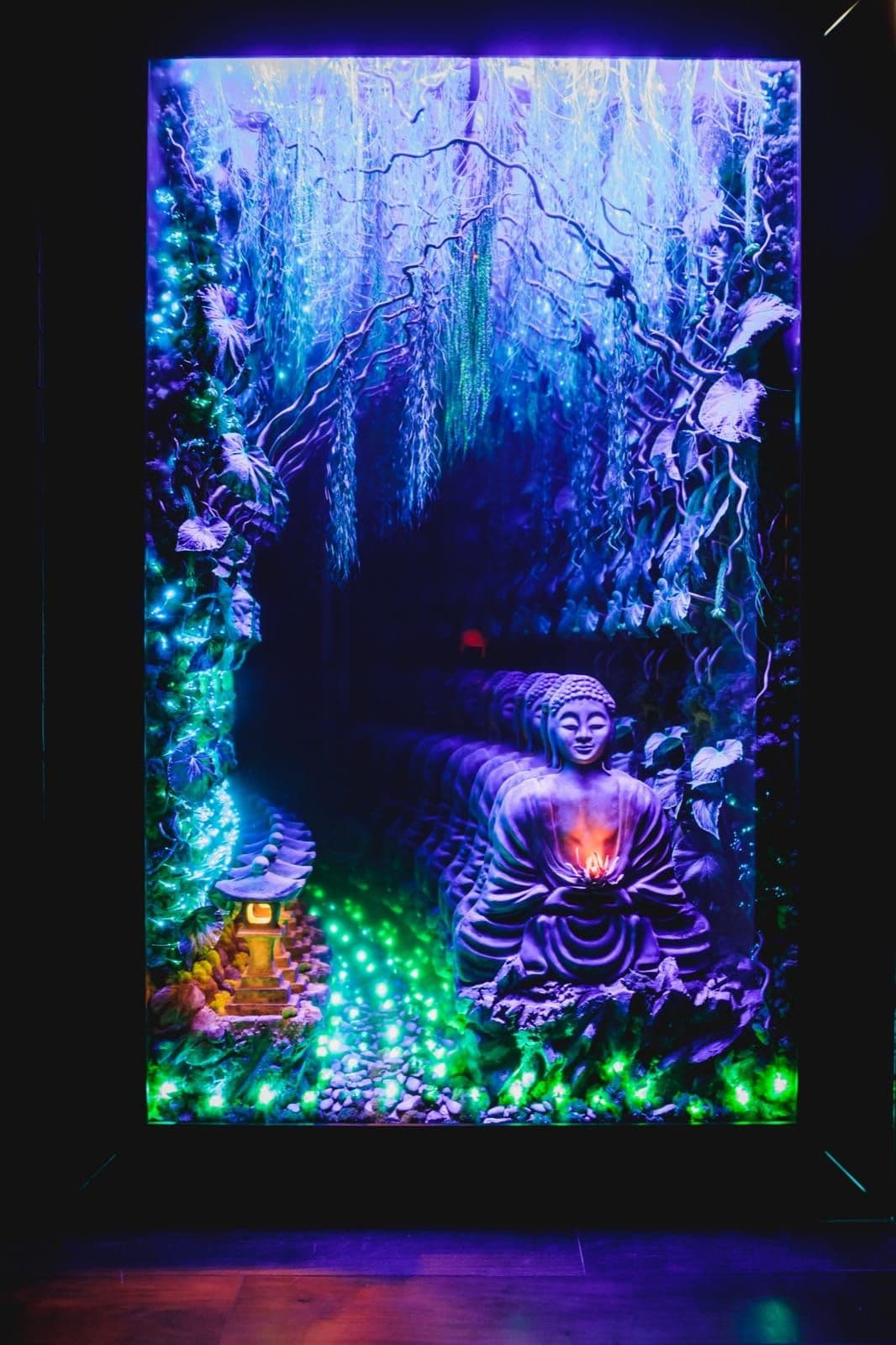
We composed five experiences for the apartment: holographic windows, an infinity mirror, an art-glass bath, ambient light and a concealed control interface.
By day, the technology recedes into the interior. After dark, the windows carry moving images and light reveals another side of the room. The resident chooses when to make that change.
Meet Ailla.
Villa Ailla is our next chapter: a phygital residence in Bali with living walls, changing artworks and a character of its own.
Digital artists draw on Bali’s water, light, wind and natural textures to create artworks for the villa’s surfaces.
We plan to launch Villa Ailla in the fourth quarter of 2026.
Inside the project ↗Celebrate. Recharge.
Elevate.
A place to gather. A place to retreat.
A place to make the ordinary feel richer.
We call these three states Celebrate, Recharge and Elevate. Each resident gives them their own rituals, sounds and images.
The room meets
the occasion.
An intimate dinner slowly becomes a celebration. Light, image and sound give the evening its own character.
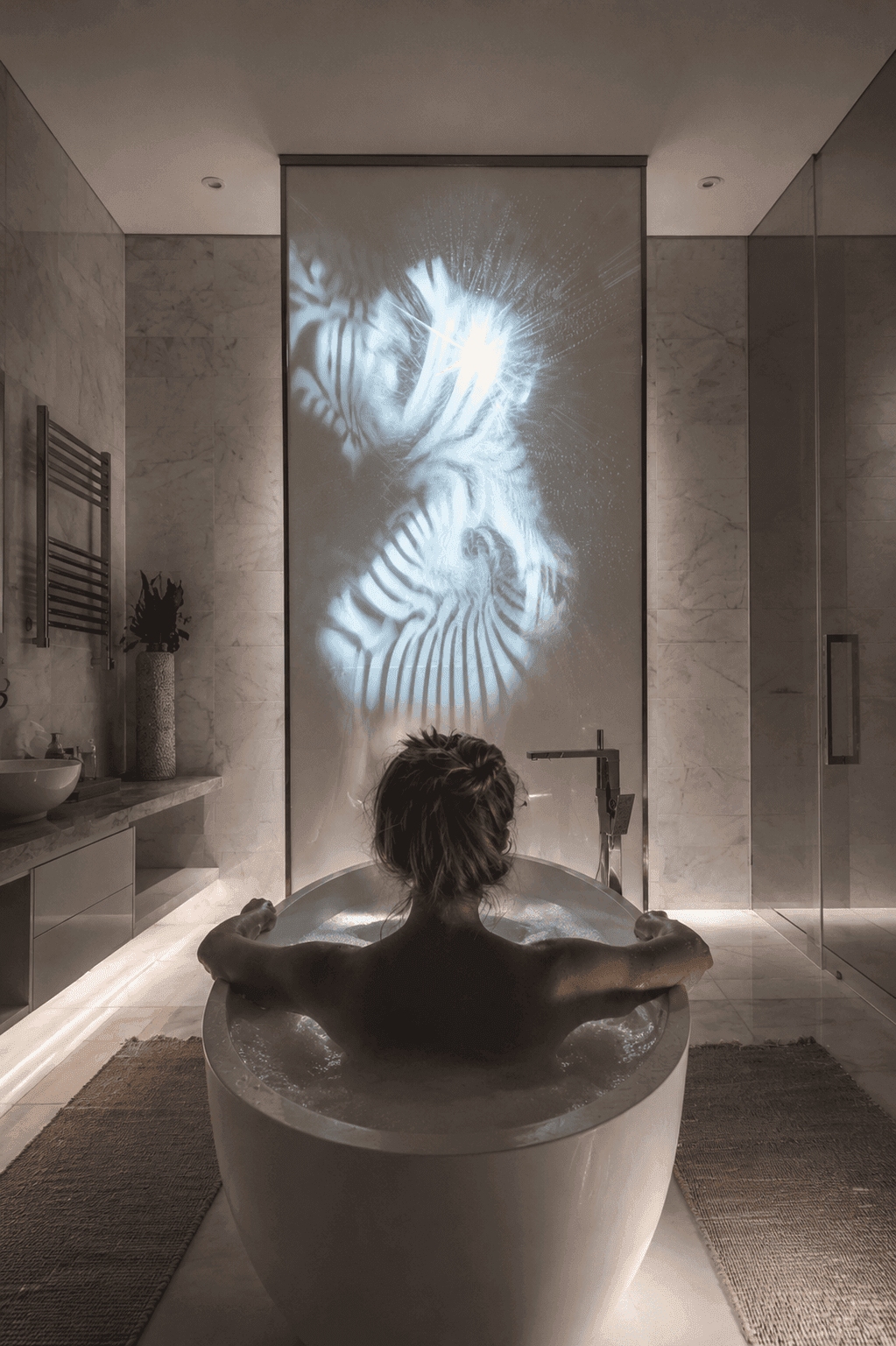
A quieter
kind of presence.
Slow-moving images, soft sound, space to sit still. An atmosphere that asks less of you.
A familiar ritual,
another dimension.
A morning stretch, a favourite record or an unhurried Sunday takes on a cinematic quality. The room helps you settle into the moment.
These are starting points. A scene can be composed for a season, a gathering or a particular work of art. New images and soundscapes give a familiar home more ways to be enjoyed.
How a phygital
interior comes together.
The foundation is a physical space: architecture, materials and everyday life. Digital art, light, spatial sound and simple controls add new possibilities. AI is an optional layer that we are still exploring.
One room.
Four creative layers.
Architecture, materials, daylight and acoustics. A complete home, even with the digital layer switched off.
Architecture + art and light + sound + control. Together, they create an atmosphere that can change.
AI can add to this composition. A phygital interior can exist without it.
The foundation is a physical space: architecture, materials and everyday life. Digital art, light, spatial sound and simple controls add new possibilities. AI is an optional layer that we are still exploring.
Content is the primary instrument. A projector makes an image visible; the artwork gives it meaning. Projection mapping aligns that image with architectural surfaces, so its scale, movement and rhythm become part of the room.
Sound deserves the same care. A quiet soundscape can make a room feel more expansive. A musical composition can become the focus of an evening. Direction, distance and volume all shape the experience.
Changing the mood should be simple: choose a scene, adjust the light or sound, then get back to your evening. The controls deserve as much care as the experience they open up.

From controlling a home
to composing an experience.
Smart-home automation and phygital interior design often work together. Automation coordinates lighting, climate and shading. Phygital design brings art, light and sound into a creative composition. Both shape how a home feels; their roles overlap.
A home also needs quiet. There are hours when daylight, materials and silence are enough. For us, a slower approach to digital living means letting the resident choose when technology has a presence, and when it fades away.
For architects, this means considering digital art and spatial sound early, alongside daylight, acoustics, surface finishes and viewing positions. Planning where the equipment can be concealed helps the room feel complete when the digital layer is off.
| Focus | Home automation | Phygital interior design |
|---|---|---|
| Typical focus | What should the home do? | How should this moment feel? |
| Material | Devices, settings, schedules | Light, artwork, sound, pace |
| Example | Dim lights at a chosen time | Compose a transition from dinner to a quiet evening |
| Shared goal | An environment residents can understand, choose and enjoy. | |
Could you talk
to your home?
Poe in Altered Carbon suggests another possibility: a home with a voice and a personality.
AI Soul is Clear Visionary’s experiment in conversational control for phygital interiors. We are exploring how a resident’s request could guide choices of artwork, lighting and spatial sound.
“Something softer for tonight.” To respond, a system needs to know which scenes are available, what can change and how the light, image and sound work together. The resident sets the intention; artists give the experience its character.
We are developing this conversational layer in our lab around a defined collection of scenes. The ambition is a home whose atmosphere you can shape in a few words. Conversational co-creation remains a work in progress.
For us, the future of interiors begins with that choice. A home can hold more moods, more rituals and more ways of being together. The possibilities we first saw on screen become part of everyday life.
Cinema let us imagine living there.
Now we can decide how we want to live.
Phygital interiors,
in practical terms.
What does “phygital” mean in interior design?
“Phygital” combines physical and digital. In interior design, it describes physical spaces composed with digital art, light, sound and responsive controls. These elements let residents change a room’s atmosphere.
Is a phygital interior the same as a smart home?
They overlap. Smart-home systems coordinate functions such as lighting, climate and shading. Phygital interior design focuses on how digital art, light and sound are composed for the space and the people living in it.
Does every phygital interior need AI?
No. Digital artwork, spatial sound and simple scene controls can create a phygital interior. AI is an optional layer for exploring conversational control and co-creation.
Can a phygital home still feel quiet?
Yes. Quiet scenes, slow movement, adjustable sound and a clear off switch can be part of the design. A phygital home can be restful, with the digital layer as subtle as the resident wants.
When should an architect consider digital art and spatial sound?
During the early concept stage, while surfaces, daylight, acoustics, viewing positions and equipment locations can still be considered together. An existing home needs an assessment of the rooms and the experiences its residents want.
Where can I see Clear Visionary’s residential work?
Explore Cyber Zen Apartment and the in-progress Villa Ailla, or browse the studio’s Living projects.
About this essay
Adapted from the Design With Senses talk by Aleks Andriienko and Jane Levitan in Bali on 5 August 2026. It presents Clear Visionary’s approach to phygital interiors, drawing on the studio’s residential work in Moscow and Bali.
- Cyber Zen Apartment — project description and photography.
- Villa Ailla — project in progress.
- The Art of Living, redrawn. — the studio’s manifesto.
Clear Visionary is a multimedia studio based in Bali, co-founded by Aleks Andriienko and Jane Levitan. The studio conceives and orchestrates residences, wellness environments and cultural experiences. Meet the studio ↗